

A CITIZEN'S GUIDE TO THE Alberta October Referendum
Nine Questions. One Direction. Your Decision.
There was a time when Canada meant something to most people who lived here. A country where a
single income could carry a family. Where young people assumed they would one day own a home.
Where a doctor was a phone call away, not a six-month waiting list. Where classrooms were places
of learning, not managed chaos.
That Canada still exists in memory for many of us. For younger Albertans, it exists only in the
stories their parents tell.
In October 2026, Albertans will be asked nine questions. The answers they give will shape the
future of this province, and may determine whether that future belongs to Alberta alone.
This guide was produced to help you think through those questions clearly, honestly,
and on your own terms.
Published by YakkStack | sheldonyakiwchuk.substack.com
Where We Are. How We Got Here.
Alberta generates wealth that funds programs across this country. It has done so for generations. In
return, it has watched federal policy decisions made by governments it did not elect restrict its energy
sector, inflate its cost of living, and overwhelm its schools and hospitals with growth that no provincial
government was resourced to absorb.
This is not a complaint. It is a documented pattern.
In 2021, 61.7% of Albertans voted in a provincial referendum to remove the principle of equalization
from the Canadian Constitution. Nearly two thirds of the province formally registered that the financial
arrangement at the heart of Confederation was wrong. Ottawa did not reform it, did not renegotiate it,
and did not seriously engage with the result. The next equalization payment arrived on schedule.
When you run a legitimate democratic process and the result is ignored, you learn
something important about the system you are operating inside.
Alberta has tried every available mechanism for having its voice heard within the federation. The
Reform movement. The Firewall letter. Elected Senate nominees that Ottawa ignored. Referendum
results that Ottawa dismissed. Each attempt produced the same outcome.
Premier Danielle Smith's nine-question referendum is not a distraction from that history. It is a direct
response to it.
How the Nine Questions Work
The nine questions are not random. They are sequenced deliberately, moving from the personal
pressures Albertans feel daily, classroom sizes, emergency room wait times, housing costs, employment
competition, through to the structural failures of federal institutions that have made those pressures
worse and harder to address.
Each question is designed to be answered from lived experience. Each yes builds on the last. By the time
a voter has worked through all nine, the nature of the choice ahead becomes clear not because they were
told what to think, but because their own answers showed them where they already stood.
This is how durable democratic decisions get made. Not through pressure, but through honest self-
examination. The questions that follow are designed to help you do exactly that.
The Nine Questions. And the Ones Behind Them.
For each referendum question, read the leading questions first. Answer them honestly from your own
experience. Then read the official referendum question and ask yourself where your answers have
brought you.
Question 1: Immigration Levels
Should Alberta have a say in who comes here to fill Alberta jobs?
Should community growth match the pace of housing, hospitals, and schools?
Should families already here have a fair chance before labour competition intensifies further?
Question 1: Do you support the Government of Alberta taking increased control over immigration
for the purposes of decreasing immigration to more sustainable levels, prioritizing economic
migration and giving Albertans first priority on new employment opportunities?
Question 2: Service Eligibility
Should taxpayer-funded programs prioritize the people who fund them?
Should provincial systems built for residents primarily serve permanent residents?
Should sustainability be considered before eligibility is expanded?
Question 2: Do you support the Government of Alberta introducing a law mandating that only
Canadian citizens, permanent residents and individuals with an Alberta-approved immigration status
will be eligible for provincially funded programs, such as health care, education and other social
services?
Question 3: Residency Requirements
Should people contribute to a community before drawing from it?
Is a twelve-month residency period before accessing social supports a reasonable standard?
Should the principle of earning before drawing apply to provincial benefit programs?
Question 3: Assuming that all Canadian citizens and permanent residents continue to qualify for
social support programs as they do now, do you support the Government of Alberta introducing a law
requiring all individuals with a non-permanent legal immigration status to reside in Alberta for at
least 12 months before qualifying for any provincially funded social support programs?
Question 4: Cost Sharing for Non-Permanent Residents
Should temporary residents contribute proportionally to systems they use but won't fund long-term?
Is a reasonable fee unreasonable when long-term taxpayers carry ongoing costs indefinitely?
Does fair contribution reflect a principle most Albertans already live by?
Question 4: Assuming that all citizens and permanent residents continue to qualify for public
health care and education as they do now, do you support the Government of Alberta charging a
reasonable fee or premium to individuals with a non-permanent immigration status living in Alberta
for their and their family's use of the healthcare and education systems?
Question 5: Voter Identification
Should citizens decide who governs a province?
Is confirming voter eligibility unreasonable when ID is required for most everyday transactions?
Do elections carry legitimacy when identity standards are inconsistent?
Question 5: Do you support the Government of Alberta introducing a law requiring individuals to
provide proof of citizenship, such as a passport, birth certificate, or citizenship card, to be eligible to
vote in a provincial election?
Question 6: Senate Abolition
Can you name a single senator you voted for?
Should Alberta's laws be reviewed by people Albertans cannot remove, serving until age 75?
Does unelected oversight represent western Canadians or the governments that appointed it?
Question 6: Working with other provinces to abolish the Senate.
Question 7: Provincial Judicial Appointments
Should Alberta's courts reflect the communities they serve?
Should judges shaping Alberta's laws be chosen by premiers Albertans elect?
Is it reasonable to want accountable courts when appointment power is centralized in Ottawa?
Question 7: Allowing provinces to appoint their own superior court judges (seizing judge-selection
duties from Ottawa).
Question 8: Opting Out Without Losing Funding
If Alberta generates the taxes, should it control how that money is spent here?
Should declining a federal program mean forfeiting Alberta's own contribution to it?
Is conditional funding a partnership or a mechanism of control?
Question 8: Opting out of federal programs without losing funding (e.g., similar to Quebec's
model).
Question 9: Provincial Paramountcy
When federal and provincial authority overlap, who should have the final say?
Should the government closest to the people affected make the call?
Should enforcement realities on the ground matter when policy is set in Ottawa?
Question 9: Giving provincial laws priority over federal ones in areas of shared jurisdiction.
The Decision Only You Can Make.
Work through what you just read honestly.
Think about your children's classroom. Ask them what it is actually like. How many students are in it.
Whether the pace of learning feels right or whether something has changed.
Think about the last time someone in your family needed healthcare. How long the wait was. Whether
the system felt like it was built for the people paying into it.
Think about the young people in your life. Whether they believe they will ever own a home. Whether
they see a future in the city they grew up in, or whether that future feels like it is moving out of reach
one year at a time.
Canada once meant something different than it does today. Parents worked one job and built a life.
Young families assumed homeownership was a matter of when, not if. Doctors were accessible. Schools
functioned. The country felt like it was working in the direction of the people living in it.
Alberta has been the economic engine of this country for decades. It has contributed more than it has
received, by design, by formula, and by the sustained decisions of federal governments it did not vote
for. It has tried every legitimate mechanism available to change that arrangement. The results have
been consistent.
If Alberta's democratic will does not produce change inside this federation, what
mechanism actually does?
Nine questions. Nine areas where Albertans are being asked whether this province should define its
own terms. Nine affirmations, if your honest answers take you there, that build toward a conclusion no
one needs to hand you.
Because that conclusion only means something if you arrived at it yourself.
I Sold Myself. The only person who can answer these questions is you.
The Tenth Question.
If your nine answers have brought you here, this question is not a leap.
Do you agree that the Province of Alberta should cease to be part of
Canada to become an independent state?
Please share this guide with your friends, family, and community, not out of anger or hostility, but out of true
sincerity. This is a significant decision that deserves honest reflection.
Produced free of charge by YakkStack | sheldonyakiwchuk.substack.com

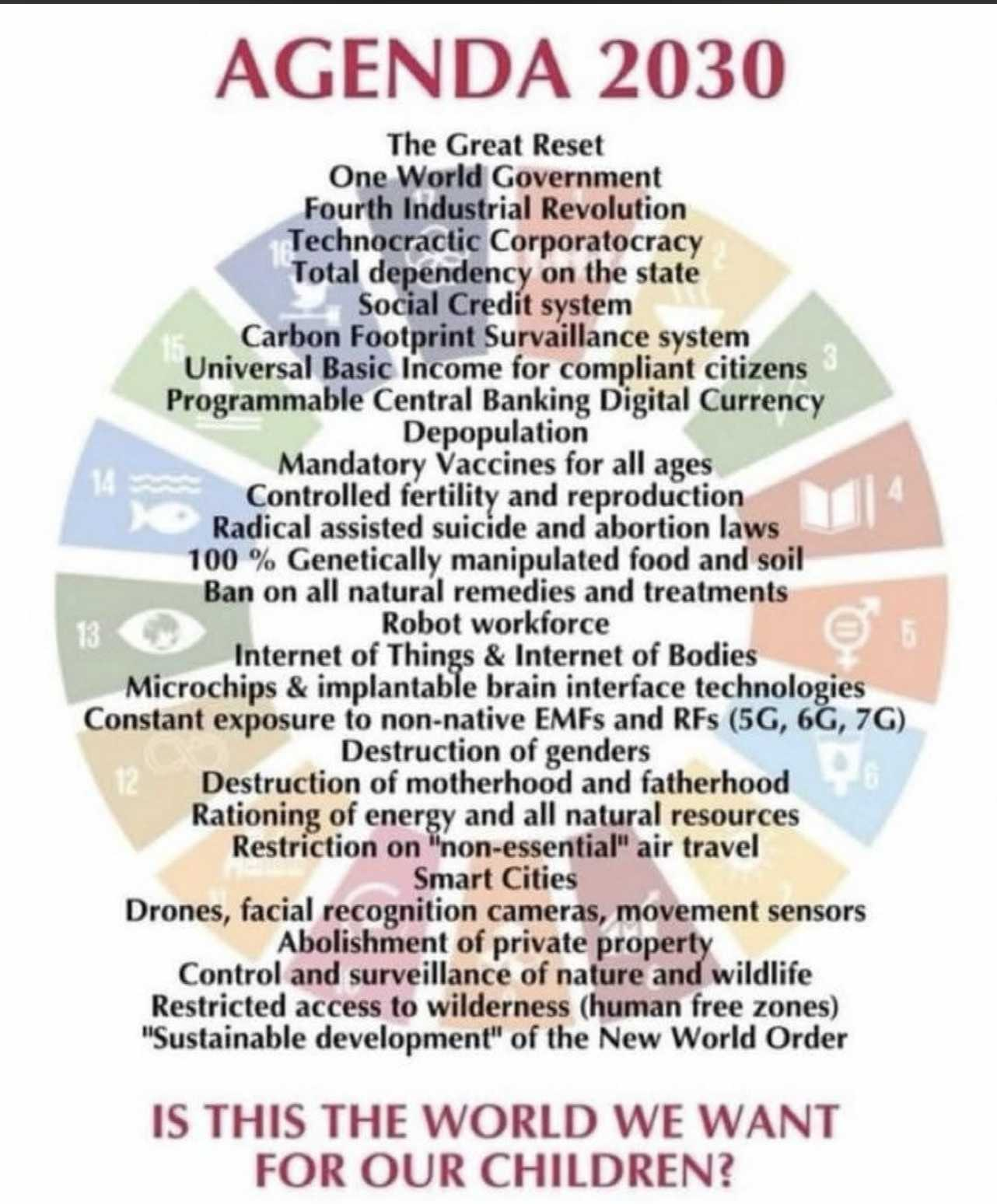
THE GREAT RESET: I'VE CONNECTED THE DOTS. NOW CANADIANS NEED TO CONNECT THE CONSEQUENCES.
By Rich Angel | Wake Up Canada News
After years investigating Canada's gold reserves, Brookfield, Mark Carney, the World Economic Forum, our pensions, wars, digital banking and foreign ownership, I've reached a disturbing conclusion.
We're witnessing a massive transfer and concentration of economic power, and most Canadians are being shown the individual pieces instead of the entire picture.
Here's how I watched it unfold.
FIRST, THE FINANCIAL FOUNDATION.
Canada spent decades selling virtually all its official gold reserves. Our wealth became increasingly dependent on financial markets, investments and international institutions.
THEN CAME THE CRISIS YEARS.
In 2020, the World Economic Forum publicly promoted its Great Reset. Governments accelerated digital services, while the pandemic exposed how quickly emergency powers could reshape everyday life.
In 2022, the Freedom Convoy bank freezes demonstrated that access to money could be restricted through extraordinary ...